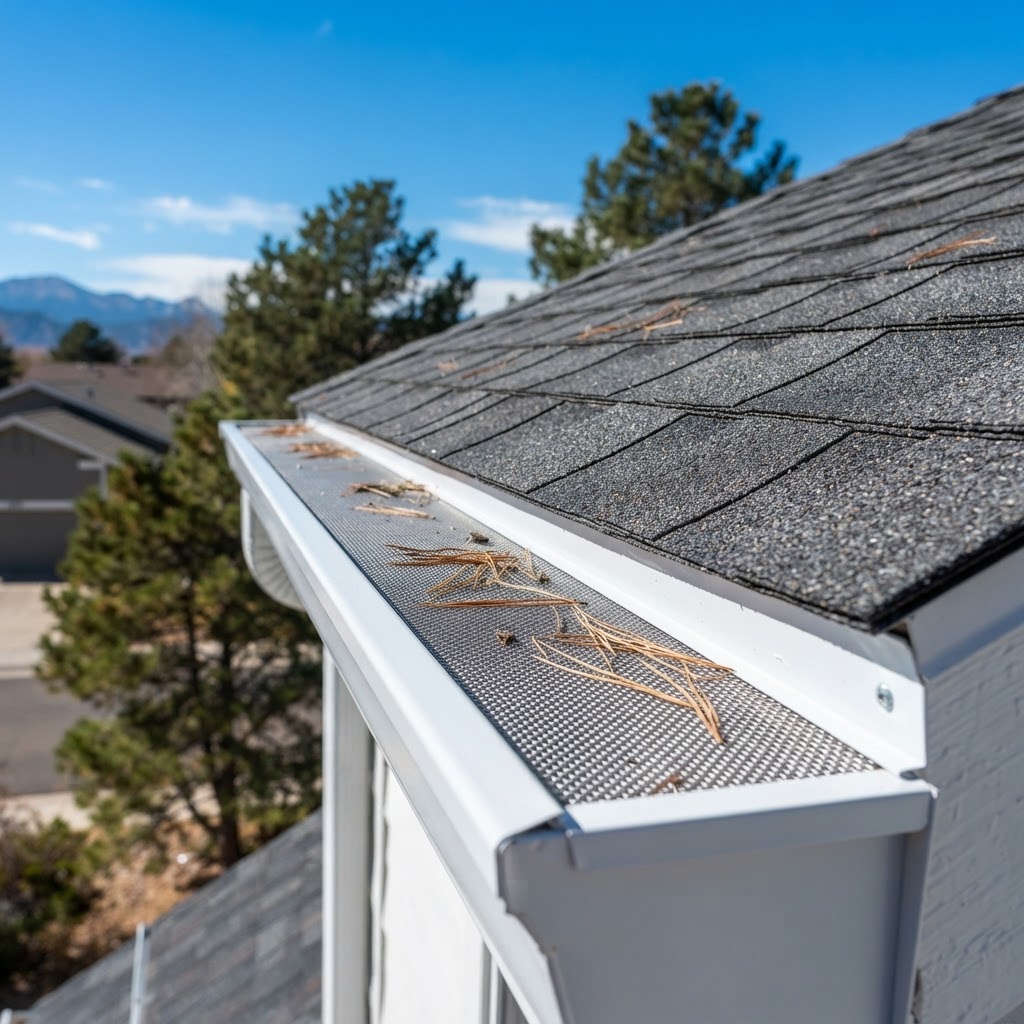
A gutter guard only earns its keep if it stops what actually lands on your roof. In the north metro that's cottonwood fluff, pine needles from the foothills, maple and ash leaves, and a steady grit of shingle granules. Ethan fits guards that shed that debris while still taking a hard downpour, and he'll tell you honestly if your house doesn't need them.
Types Ethan installs
Micro-mesh guards for needles and fine debris, perforated aluminum covers for mostly-leaf situations, and downspout filters where the main problem is a clogged outlet. Each has a place; none is right for every roof.
How they handle snow and ice
Guards sit at roof pitch so snow slides off instead of piling on the gutter. They don't prevent ice dams by themselves, but a gutter that isn't packed with wet leaves freezes far less.
Retrofit or new install
Guards go onto existing gutters if the gutters are sound and pitched right. If they're sagging or pulling away, Ethan will tell you to fix that first rather than cap a problem.
Maintenance honesty
No guard is truly maintenance-free. Expect a quick rinse of the top surface once a year instead of scooping muck twice a year on a ladder.
Common questions
- Will guards cause water to overshoot in heavy rain?
- Cheap foam or brush inserts can. Properly fitted micro-mesh and perforated covers take Front Range storms without overshooting.
- Do guards void my roof warranty?
- Ethan installs guards that attach to the gutter, not under the shingles, so there's no interference with the roof.
- Can I add guards to my existing gutters?
- Yes, as long as the gutters are in good shape. Ethan checks that at the estimate.