
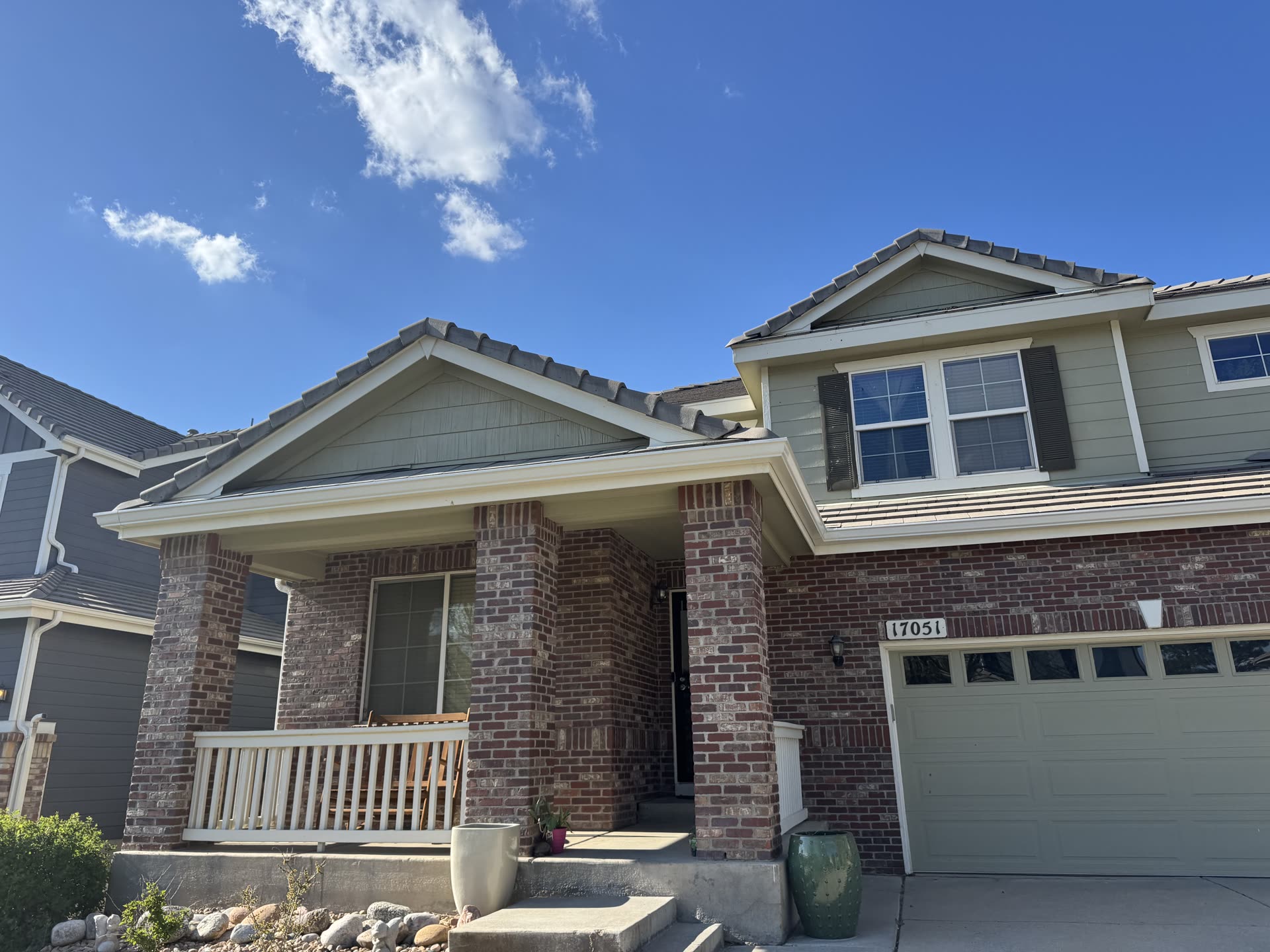
What decides gutter size
Every gutter run carries the water from the section of roof directly above it. How much water that is comes down to three things: the roof area draining into the run, how steep that roof is, and whether a valley empties onto it. The overall size of the house matters less than how the roof is shaped and split up.
Two homes with the same footprint can need different gutters for exactly that reason. A small ranch with a moderate pitch and short, simple runs usually does fine with 5-inch gutters. A two-story with big, steep planes and a few valleys often needs 6-inch. Because 6-inch gutters and 3x4 downspouts cost more, there's no reason to put them on a roof that doesn't need them.
Ethan sizes gutters to the roof area feeding each run. At the free on-site estimate he measures the roofline, notes valleys that dump a lot of water, and looks at where the downspouts discharge. The written number lists gutter size and downspout count, so the sizing decision is right there on paper.
Steep pitches and valleys
On a low-slope roof, rain runs off at an easy pace and drops into the trough. On a steep roof it picks up speed, hits the gutter harder, and can shoot past the front lip of a shallow gutter before the gutter is anywhere near full. A 6-inch K-style gutter is wider and deeper, so it catches more of that fast-moving water.
Where two roof planes meet, the valley gathers water from both and delivers it to one short stretch of gutter. In a hard storm that stream can overshoot a 5-inch trough at the same spot every time, and the landscaping below usually shows the damage. Steep pitches also dump snow hard onto the gutter, which is rough on any run that isn't hung tight.
Newer two-stories in Thornton, Broomfield, and Erie are a common example. Many have complex rooflines with several valleys, and the original builder-grade gutters are often 5-inch on roofs that really call for 6-inch.
Summer storms and spring melt
Front Range weather tests gutters in two ways. Summer storms drop a lot of rain in a short burst, so what matters is how the gutter handles the hardest few minutes of the storm. A system that copes with a steady drizzle can still overflow when a thunderstorm parks over the house.
A couple of warm days after a heavy snow can send a lot of water down. What makes a melt overflow is ice: a layer frozen in the bottom of the trough, or a downspout outlet that's frozen shut or plugged, leaves the water less room than the gutter was built to carry.
Once that happens, the water has nowhere to go but over the edge, and it lands along the foundation. On a two-story with a big back plane, that can mean a curtain of water against the basement wall every warm afternoon of the melt. Size still counts here, since a 6-inch trough keeps more open room above the ice and a 3x4 downspout is harder to plug, so undersized or half-clogged gutters are the first to spill in a melt. Clear troughs and open outlets keep the rest of it moving.
Downspouts: 2x3 or 3x4
A gutter can only drain as fast as its downspouts let it, and plenty of overflow problems start at the outlet. The common pairing for 5-inch gutters is a 2x3-inch downspout. A 3x4-inch downspout has a much larger opening, so it empties a run faster and is harder for a wad of leaves, pine needles, or cottonwood fluff to plug.
On large or steep roofs, 6-inch gutters usually go with 3x4 downspouts. A bigger trough draining through a small outlet can still back up at the outlet, so the two get sized together.
Placement counts as much as size. A downspout near a valley can drain that concentrated stream before it travels down the run, and a long run with an outlet at each end moves water a shorter distance than one draining to a single corner. On some houses, an added or larger downspout fixes an overflow problem without changing the gutter size at all.
Signs your gutters are too small
Rule out the simple causes first. A gutter packed with needles overflows exactly like an undersized one, and a run that sags in the middle holds water no matter how big it is. If the troughs and downspouts are clear, each run is pitched toward its outlet, and you still see these signs in a hard rain, the gutters are likely too small for the roof feeding them:
- Water pouring over the front lip while the downspout is already running full
- Overflow at inside corners or directly below a roof valley
- A trench, bare strip, or washed-out mulch in the bed under the eave
- Water backing up at the top of a downspout and spilling around the outlet
- Splash marks or streaks on the siding or brick below the gutter line
Before the estimate
Watch where water spills during the next hard rain, especially at inside corners and under valleys. Those spots, and the roof above them, are the first things to point out at a free on-site estimate.
More articles
- Seamless vs. Sectional Gutters: Why the Joints MatterJoints are where gutters usually leak. Sectional gutters have a joint wherever two pieces meet, while a seamless system keeps them to the corners, end caps, and downspout outlets.
- Where Downspouts Should Discharge to Keep Your Basement DryThe loose backfill against a foundation soaks up whatever a downspout drops there, so the water needs to land well out, past any low spot along the wall.