
Time it between the last leaves and the first freeze
Fall gutter cleaning works best in a narrow window: after the trees are bare and before the gutters freeze. Clean too early and the last leaves fill the trough right back up. Wait too long and those wet leaves freeze into a block that keeps meltwater from reaching the downspout.
On the Front Range those two dates don't always line up, so watch the forecast for a dry, calm stretch in late fall. If your lot has heavy tree cover, plan on two passes: one when most of the leaves are down and another after the last of them.
The freeze is the real deadline. A packed gutter can't drain when snow melts, so water sheets over the edge and refreezes, and the weight of that ice pulls hangers loose. A February thaw-and-freeze cycle can rip a neglected gutter right off the fascia.
Ladder safety comes first
Nearly every step here happens up on a ladder, so the setup matters more than the scooping. Run through these before you climb:
- Set the ladder on firm, level ground, and use a stabilizer or standoff so it doesn't rest on the gutter. A ladder leaning on the trough can dent or crush it.
- Keep three points of contact and move the ladder instead of reaching. If your belt buckle drifts outside the rails, you've reached too far.
- Stay off the top few rungs, since up there you have nothing to hold onto and it's easy to lose your balance.
- Have someone at the bottom to steady the ladder and hand things up.
- Look up before you set up, and keep the ladder well clear of the power line running to the house.
- Skip the job on wet, icy, or windy days.
- If the gutters are two stories up or along a steep roof, that's a reasonable place to stop and call someone with the right equipment.
Clear the troughs and watch the water run
Wear gloves and hang a bucket from the ladder or lay a tarp below. Clear the area around each downspout outlet first, then work away from it so loose debris doesn't get shoved down the downspout. A plastic scoop gets the muck out without scratching the gutter.
Once a run is empty, put a hose at the far end and let it flow. Water should move steadily toward the downspout. If it pools in one stretch, that section has lost its pitch or is sagging between hangers, and the standing water there is what freezes first.
While the water runs, look for drips at the corners, end caps, and outlets. On older sectional gutters, check every joint as well, since each one is a spot that can drip or split in a freeze.
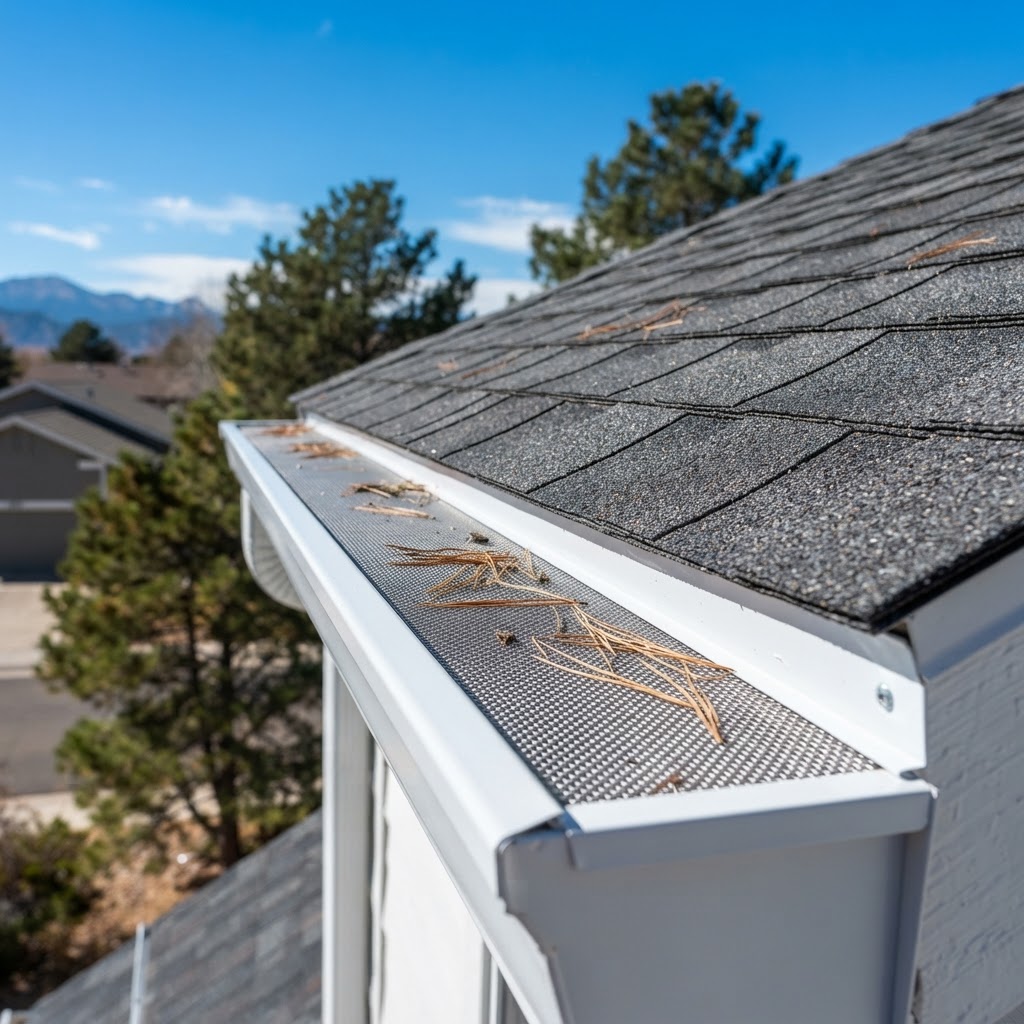
If you already have guards, this step shrinks to rinsing the top surface and making sure every section is still seated and fastened.
Flush every downspout
Feed the hose into the top of each downspout and let it run. Water should come out the bottom about as fast as it goes in. If it backs up into the gutter instead, there's a clog, most often at an elbow.
Pull the extension or the bottom elbow off and clear what you can reach by hand. Running the hose up from the bottom will often push the rest loose. Check every downspout, even the ones that looked fine in September, because a half-plugged downspout can freeze solid in the first real cold snap.
Tighten hangers, then check the extensions
With the gutters clean, look at what holds them up. Hidden hangers are screwed through the gutter into the fascia board, and snow and ice loosen them over time. Snug any screws that have backed out.
While you're at it, watch for a gutter sagging between hangers, peeling paint on the fascia, a soft spot when you press the board, or water stains on the soffit below. Any of those can point to soft wood behind the gutter, and that's a repair to make before winter hangs ice on it.
Last, walk around the house and check each downspout extension before the ground freezes:
- It carries water at least four feet from the foundation. Go farther on clay soil, which plenty of Front Range yards sit on, or where the yard slopes back toward the house.
- It's attached to the downspout, not crushed or split, and points downhill.
- Mulch and leaves aren't piled up around the outlet.
After the cleanout
Once guards are on, most of the scooping drops off this list, and the trees around your house decide which kind fits. If the cleanout turned up a sagging run or a soft spot in the board, that gets fixed before any guard goes on.
More articles
- Choosing Gutter Guards for Pine Needles and CottonwoodWhat lands on your roof decides which gutter guard works. Pine needles and shingle grit get through most perforated covers, so they call for micro-mesh.
- How Gutter Guards Handle Colorado Snow and IceGuards keep debris out so gutters can drain during a thaw. They won't stop ice dams on their own, and the way a guard attaches matters in wind and snow.