What actually holds a gutter up
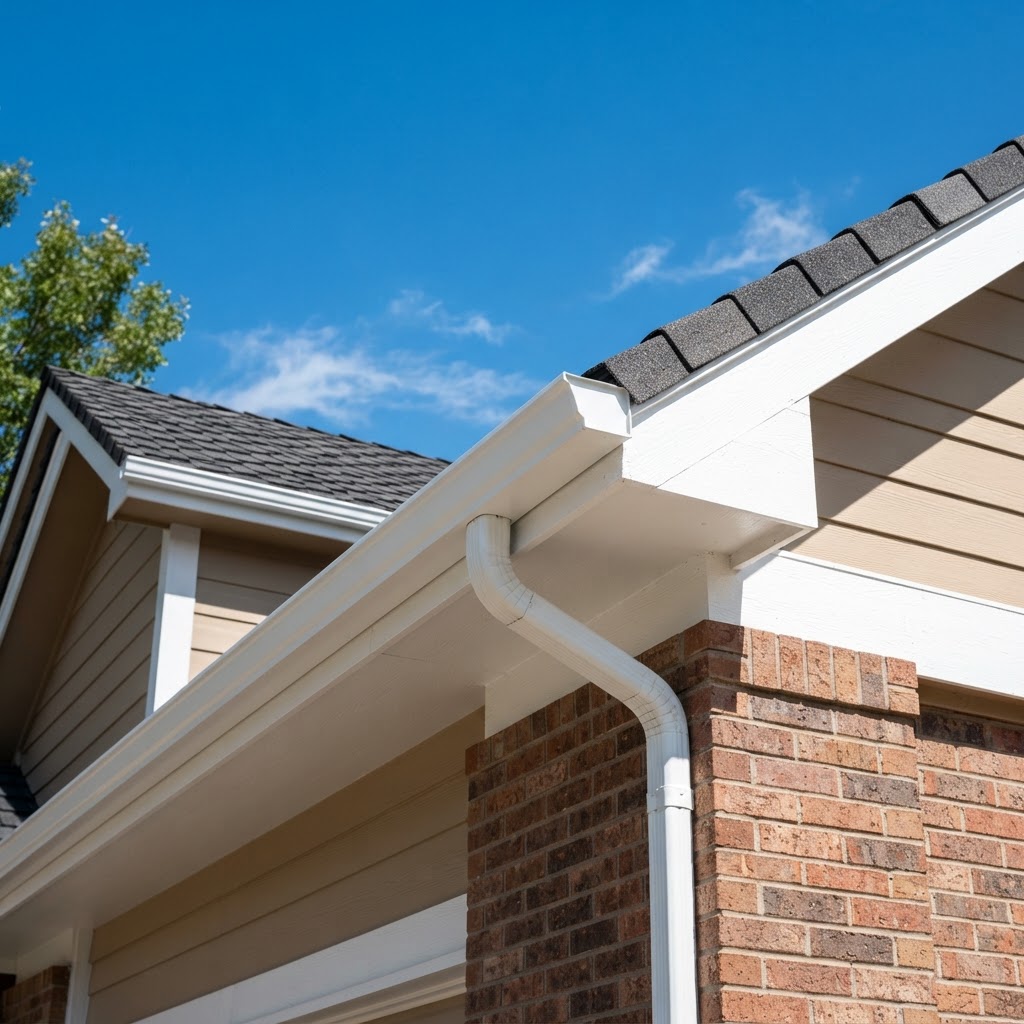
Install day is a bad time to find out the fascia is soft. A new gutter can be sized right for the roof, but all the water, wet debris, snow, and ice it carries still hangs on a row of screws in that board.
On a Front Range house, that load shifts all year. Summer storms fill the trough fast, spring melt can keep it wet for days, and a February thaw-and-freeze cycle can pack it with ice. Solid wood keeps a screw tight through all of that, while soft wood lets it pull out a little more each time.
A new gutter can't fix a soft board
Hanging a new gutter on rotted fascia is like mounting a heavy shelf into crumbling drywall. It looks fine the day it goes up and starts to sag once real weight sits in it. Screws strip out, the gutter tips away from the roof, and water starts running down behind it.
That water lands right on the board, which is one of the main ways fascia rots to begin with. A new gutter on a bad board ends up feeding the same problem it's hanging from.
Fixing the board is the only repair that holds, which is why a soft board behind the gutter gets replaced before anything new is hung.
The board gets checked at the estimate
Ethan checks the fascia during the free on-site estimate, along with measuring the roofline and looking at where your water actually goes. That's the right time to find a soft board, while there's still room to plan around it.
Hanging the gutters first and fixing the board later means doing the work twice. If a soft board gives out after new gutters go up, those gutters have to come back down before anyone can get at the wood.
Rot likes to hide right behind the gutter line. The face of the board can look painted and fine from the driveway while the wood behind the hangers has gone soft. It's common on older homes around the metro, like Wheat Ridge houses still wearing their original sectional gutters or older Longmont neighborhoods where years of overflow have soaked the board.
Up close, the giveaways are:
- Hangers that shift when the gutter is nudged
- Paint peeling or cracking along the edges and joints of the board
- A spot that feels spongy when pressed
- The gutter leaning out, away from the roof edge
Fascia work is priced separately
If the board behind the gutter is soft, it has to be replaced before anything gets hung. Ethan prices that separately and tells you before install day, so the fascia repair is part of the plan from the start.
How much board gets replaced depends on how far the rot has spread. A soft spot near a corner might mean one short length of new fascia, while a side of the house that has been soaking behind a leaky gutter for years can need a much longer run.
Seeing the board work priced on its own makes it easy to tell what the gutters involve and what the fascia adds.
What the repair involves
The gutters come down first, and the bad board is cut out back to sound wood. New fascia goes in, either primed wood or composite board, and it gets primed and painted to match or wrapped in aluminum coil stock. Then the gutters go back up on solid backing, pitched toward the downspouts.
Painted wood keeps the look of the original trim. Wrapping the board in colored aluminum covers the wood, which makes sense if you'd rather not repaint that stretch of roofline down the road.
It's also worth knowing why the old board rotted, because the new one goes into the same spot. If water was getting behind the old gutter, a new one sized for the roof and pitched to drain keeps more of it moving toward the downspout instead of down the board.
Planning the fascia and gutters together
Have the board behind your gutters checked before new ones go up, so any soft fascia comes out while the old gutters are already down and the new ones only get hung once.
More articles
- Signs Your Fascia Is Failing Behind the GuttersYour gutters usually show failing fascia before the board itself does. A screw that spins without ever tightening is a sign the wood behind it has gone soft.
- How Snow Load and Ice Pull Gutters Off the FasciaFront Range thaw-and-freeze cycles can pack a gutter with ice until the hangers give. The gutters that come down usually had a weak point first, most often soft fascia.