Your gutters usually show it first
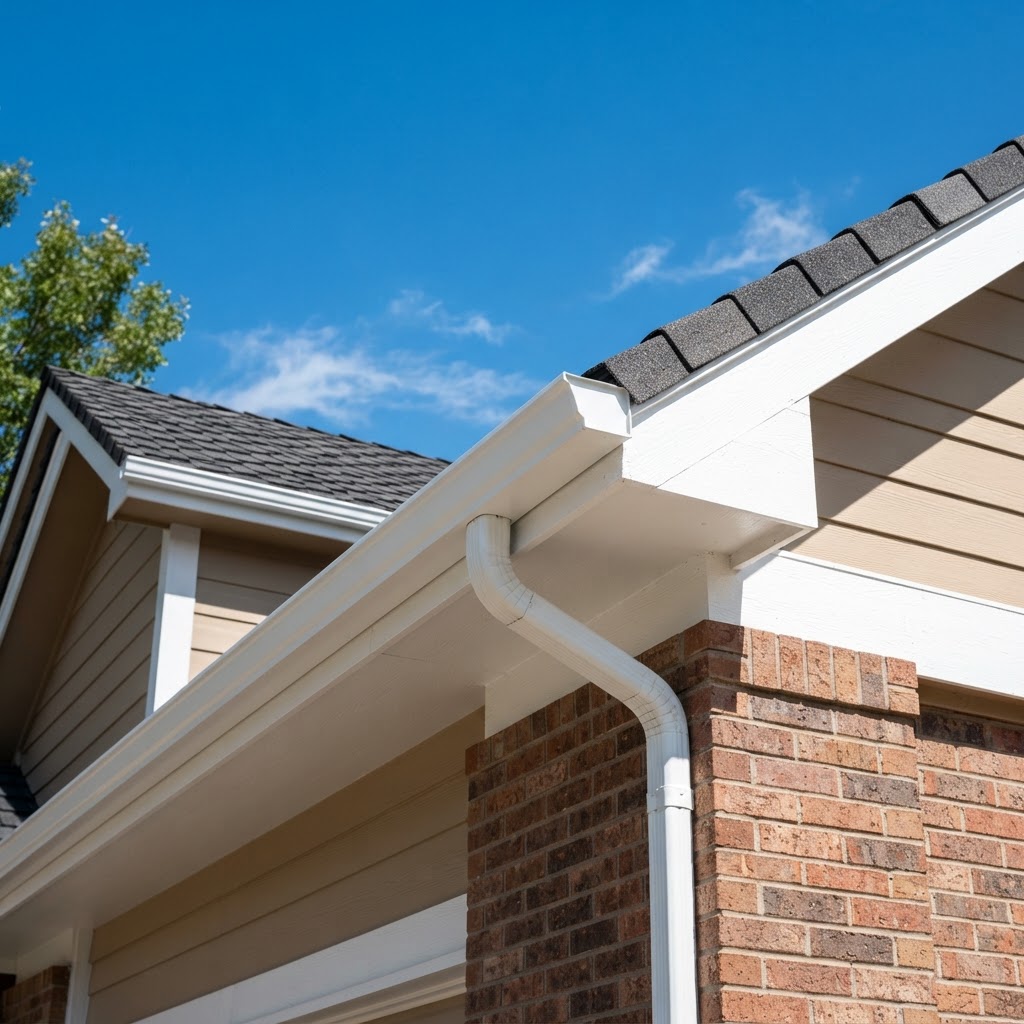
Fascia is the board that runs along the edge of your roof, and it's what your gutters screw into. Along the gutter line, most of the board sits hidden behind the trough, so you rarely get a clear look at the wood itself. What you do see is the gutter starting to act up.
Every hanger depends on the wood around its screw. When the board rots, those screws lose their grip one at a time, and the gutter sags no matter how well it was made. Catching the early signs gives you a chance to replace a section of board before a whole run comes loose.
Gutters sagging between hangers
Stand at one corner of the house and sight down the gutter line. A healthy run is straight, with a slight, steady fall toward the downspout. A failing one dips between hangers, droops at a corner, or leans out away from the roof edge.
Check the back of the gutter, too. A gap opening between the gutter and the board lets water run down behind it and straight onto the fascia, which speeds up the same rot that caused the gap.
Overflow in the same spot every storm is another clue. A low section collects water instead of moving it to the downspout, and that extra weight pulls it lower each time. In winter, that low spot tends to fill with ice, which adds even more load.
Screws backing out and hangers that move
Hidden hangers are screwed through the back of the gutter into the fascia. Sound wood keeps those screws tight, but in soft wood they work loose with every load of rain, snow, and ice, and you start to see screws backing out inside the trough or hangers that shift when you nudge the gutter.
If you can reach one safely, try snugging a loose screw with a driver. A screw that spins without ever tightening has nothing left to bite into, which usually means the wood around it has gone soft.
Old repairs are a clue as well. When a hanger has been moved a few inches from its original hole, or extra screws are crowded around one spot, that's a sign the first spot stopped holding and someone worked around it instead of fixing the board.
Peeling paint and soft spots
Paint is what keeps water out of the wood itself. When it peels, blisters, or cracks along the edges of the board or at the joints between boards, water soaks into the grain, and once the paint fails the wood can soften within a couple of seasons. Dark stains on the board or water marks on the soffit just below it point the same way.
To test a suspicious spot, press it firmly with your thumb or the tip of a screwdriver. Sound wood resists, while rotted wood gives, feels spongy, or flakes away at the surface. On a single-story eave, do this from a ladder set on firm, level ground. On a two-story eave, look from the yard with binoculars and leave the probing to someone with the right equipment.
Start with the places where water tends to sit:
- Along the board just below the gutter, where water that slips behind it runs down
- At outside corners and around downspout outlets
- Where two lengths of board butt together
- Below a roof valley, where a lot of water comes off in one spot
- Anywhere the paint has already peeled or cracked
Why rehanging the gutter won't hold
The tempting fix is to slide the hanger over a few inches and drive a new screw into wood that still feels firm. That buys a little time at best. Rotted fascia keeps spreading along the board, and whatever soaked the first spot is still getting at the next one.
Painting over a soft spot or packing it with caulk has the same problem. It hides the damage for a season, but there's still no solid wood behind the hangers.
Nothing hung on rotted fascia stays put. The repair that holds is cutting the bad board out back to sound wood, putting in new fascia, and hanging the gutter on solid backing.
Older homes around the north metro are where this hides best. On Northglenn's 1960s ranches, or the bungalows and mid-century houses in and around Olde Town Arvada, boards that have been repainted again and again can look fine from the yard while the wood behind the gutter line has gone soft.
Having the board checked
Where the board has gone soft, Ethan cuts it back to sound wood, puts in primed wood or composite, and hangs your gutters back on solid material.
More articles
- Why Soft Fascia Gets Replaced Before New Gutters Go UpA new seamless gutter is only as solid as the board it's screwed into. Soft fascia gets replaced first, since screws in rotted wood pull out under the load.
- How Snow Load and Ice Pull Gutters Off the FasciaFront Range thaw-and-freeze cycles can pack a gutter with ice until the hangers give. The gutters that come down usually had a weak point first, most often soft fascia.