
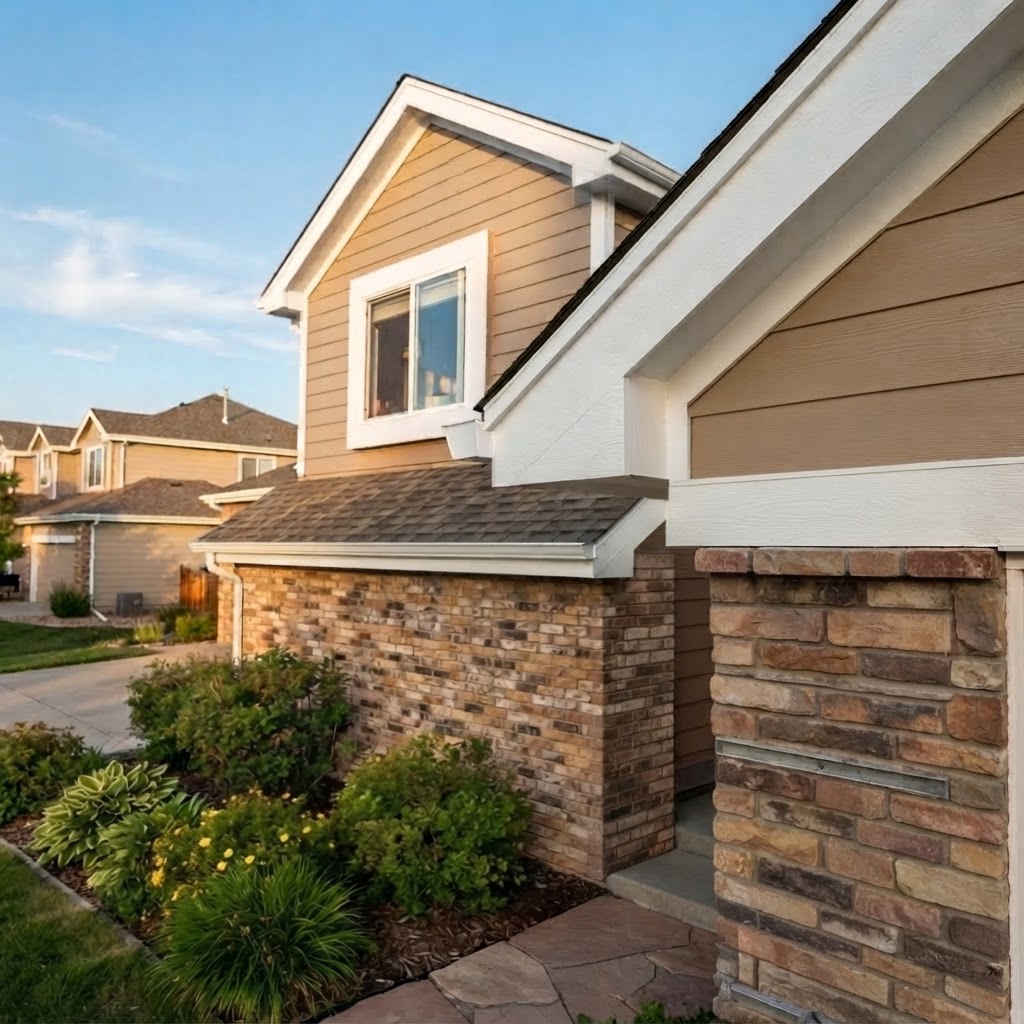
The right color can still look wrong
Paint poured from the original can and brushed on with care may still leave a patch you notice every time you pull into the driveway. That surprises plenty of homeowners, and the cause usually has nothing to do with the brushwork.
Most mismatches come down to sheen, the age of the paint around the spot, or the limits of color matching. Each one has its own fix, and sometimes the best fix is painting more than the spot.
Sheen and paint type
Sheen is how much light the dried paint reflects, from flat at one end to gloss at the other. Exterior trim is often painted in satin or semi-gloss, which are tougher and easier to clean than flat paint.
Get the sheen wrong and the touch-up shows as a shiny or dull patch, especially when low morning or evening light rakes across the board. The same product can cause it too. Semi-gloss loses some of its shine after years in the sun, so a fresh coat of the identical paint can look glossier than the weathered trim around it.
Rolled paint also leaves a slightly different texture than brushed paint, so matching the original method helps a patch blend.
On an older house, find out what kind of paint is on the trim before buying anything. A house built before 1978 may have lead paint under the newer coats, so test the trim with a lead test kit from a hardware store before any sanding or scraping. If it tests positive, don't dry-sand or heat-strip it, and hand the job to a painter trained in lead-safe work.
Oil-based paint was also common on trim for a long time, and latex touch-up paint won't hold on it well without sanding and the right primer first. Wipe a hidden spot with a cotton ball dampened with rubbing alcohol: latex paint softens and comes off on the cotton, while oil-based paint stays put.
Faded paint around the spot
Trim on a south- or west-facing wall fades and chalks as it ages. Fresh paint goes on at full strength, so even an exact match to the original color can look darker or brighter than the weathered paint beside it.
That's why the leftover can in the garage so often disappoints. It holds the color your house used to be. Latex paint also has a hard time with Front Range winters in an unheated garage. If it has frozen and comes out lumpy or stringy after stirring, it's done.
Chalky trim needs cleaning before any touch-up goes on, since fresh paint over chalk tends to let go. A patch that peels early looks worse than the faded paint it was meant to fix.
The limits of color matching
If you don't know the original brand and color, a paint store can scan a sample and mix a match. The best sample is a clean chip from a spot that gets the same sun as the area you're patching, such as the far end of the same board, because it has faded the same way. On a pre-1978 house, test that spot for lead before you cut the chip.
Scanned matches get close, but small differences can still show. Dirt or chalk on the chip can throw the reading off, and the same named color can come out a little different from one brand to the next.
Light adds another variable, because paint looks different wet than dry, and different in morning shade than in afternoon sun. Brush on a test spot, let it dry completely, and check it in the light that side of the house normally gets before painting a whole section.
Gutters are the easy part, since new aluminum gutters come prefinished and the color gets picked from samples at the estimate, with no paint involved.
When a whole board looks better than a spot
The standard way around a touch-up that won't blend is to stop at a natural break. Instead of dabbing paint in the middle of a long fascia board, you paint the whole board from end to end, or the full run of trim between two corners.
A slight color difference that ends at a corner or a joint reads as light and shadow. The same difference in the middle of a board reads as a repair.
New fascia is a good example, since a replaced board gets primed and painted anyway. If the boards on either side are badly faded, carrying the paint to the next corner helps the new one blend in.
Painting the whole board usually looks better when:
- The patch would sit in the middle of a long, visible run of fascia
- Several small spots are scattered along the same board
- A new board is going in next to old, faded ones
- Nobody knows the original sheen or color
- The paint around the spot is chalky or badly faded
Blending new wood with old
Ask about carrying the paint to the nearest corner or joint at the free on-site estimate whenever a new fascia board or soffit run is part of the job, so the new section blends in.
More articles
- Front Range Sun, Freeze-Thaw, and Peeling Trim PaintSouth- and west-facing trim takes the most sun and the most freeze-thaw. Peeling in a band right under the gutter usually means water is getting in behind the paint.
- When Fascia, Soffit, and Trim Need a Touch-UpSmall paint problems on fascia, soffit, and trim let water into the wood. Bare wood left uncovered through a Front Range winter can go soft and need a new board.