Why the sunny side wears out first
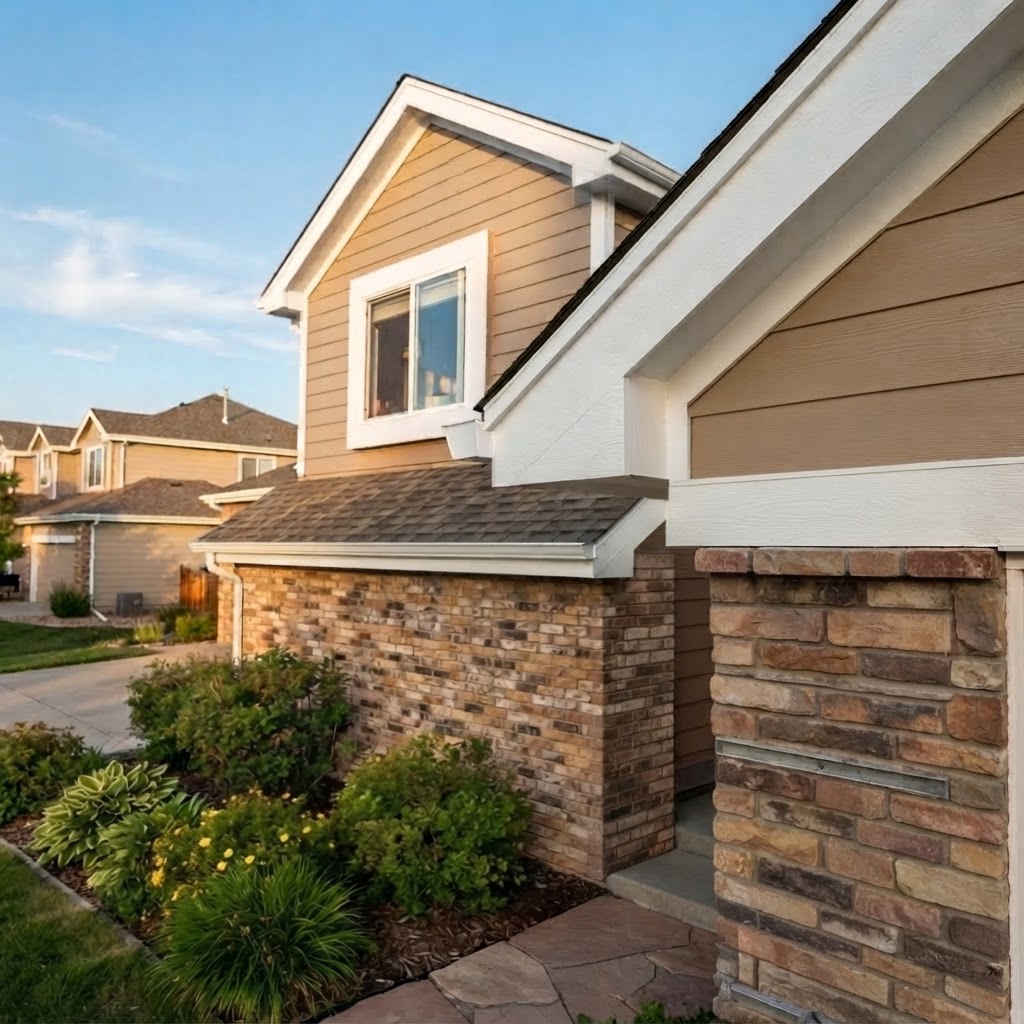
Walk around your house on a clear afternoon and compare the trim on each side. The fascia on the north side often looks close to new, while the south and west sides look tired.
South-facing trim gets direct light for most of the day, and the low winter sun hits it squarely. West-facing trim takes the hottest part of the afternoon. At Front Range elevation the sun is strong and the air is dry, so paint on those two sides ages faster than paint on the shaded ones.
Shade slows all of this down. Newer north-metro subdivisions on open lots with young trees take the full dose, while mature trees along an older street can keep a lot of trim out of the afternoon sun.
Ultraviolet light breaks down the binder that holds paint together and keeps it stuck to the wood. The damage shows up in a few different ways, and catching it early keeps the fix small.
Chalking and fading
Chalking is a fine powder on the surface of aging paint. Rub a finger across a sunny stretch of trim, and if it comes away coated, the paint is chalking. On white trim you may not notice it until you touch it.
A light dusting of chalk is normal. Heavy chalk means the top layer is breaking down, and rain washes it onto whatever sits below. Pale streaks on brick or siding right under a run of painted trim are often chalk on its way down.
Fading is easiest to spot where part of a board stayed shaded. Look behind a downspout or under the lip of a porch roof, and you'll often find the original color sitting right next to a washed-out version of it. On its own, fading is mostly cosmetic, but it tells you the paint on that side is wearing out sooner.
Both matter when a touch-up is due. New paint doesn't grip a powdery surface, so chalky trim needs a good washing and time to dry first. Faded trim is also the reason a fresh patch can stand out on a sunny wall even when the color is right.
How freeze-thaw turns cracks into peeling
Sun-baked paint gets brittle, so it can't flex as the trim swells and shrinks with moisture. Fine cracks open along the grain and at the joints. Dark trim colors heat up more in direct sun, which adds to the strain.
In winter, snow on the roof edge melts on a sunny afternoon, runs down the fascia, and seeps into those cracks. Overnight it freezes and expands, prying the paint a little farther from the wood. After a season of that cycle, hairline cracks become paint that curls and peels.
South-facing trim gets it from both directions. It takes the most winter sun of any side of the house, so the snow along that roof edge melts and refreezes more often than on any other side.
When peeling points to a water problem
Some peeling has nothing to do with sun. Paint that peels in a band right under the gutter, or around the spot where a downspout meets the wall, usually means water is getting in behind it.
Paint can't hold on wood that keeps getting wet, so a touch-up there won't last until whatever is wetting the board gets fixed, whether that's the gutter or the roof edge above it.
Peeling over wood that has gone soft is a different job altogether. The board gets repaired first, and the paint comes after.
What to watch for
A slow lap around the house each year, ideally in late summer, catches most of this while it's still a small job. On the south and west sides, look for:
- A powdery film that comes off on your finger
- Strips of trim that are lighter than the shaded parts of the same board
- Hairline cracks along the grain or across the ends of boards
- Paint lifting at joints, corners, and the bottom edge of the fascia
- Gray, weathered wood showing through
- Peeling that lines up with a gutter or downspout
Checking the sunny side
Peeling that sits over soft fascia or traces back to a gutter gets the repair first, and then Ethan paints the new wood to match.
More articles
- When Fascia, Soffit, and Trim Need a Touch-UpSmall paint problems on fascia, soffit, and trim let water into the wood. Bare wood left uncovered through a Front Range winter can go soft and need a new board.
- Why Exterior Touch-Up Paint Doesn't Always MatchSheen, faded paint around the spot, and the limits of color matching can all make a touch-up stand out. Painting to the next corner or joint often hides the difference.